
10th Edition of International Conference on
Traditional Medicine and Integrative Health
June 24-26, 2027 | Rome, Italy
Traditional Medicine
Traditional medicine (TM) is stated as the sum of knowledge, skills, and practises based on theories, beliefs, and experiences that are indigenous to various cultures and are used to maintain health, as well as to prevent, diagnose, improve, or treat physical and mental conditions. Some traditional medicine systems are backed up by massive amounts of literature and recordings of theoretical notions and practical abilities, while others are passed down verbally from generation to generation. Till now, the majority of the population in several regions of the globe continues to rely on traditional medicine to cover their primary health care needs. Traditional medicine has grown in popularity over the last few decades all across the world. These approaches have been employed not only for primary healthcare of the poor in developing nations, but also in other countries where conventional medications predominate in the national healthcare system.
- Traditional Korean Medicine
- Traditional Japanese Medicine
- Traditional Chinese Medicine
- Traditional African Medicine
- Traditional Indian Medicine
- Traditional Medicine and Their Authentication
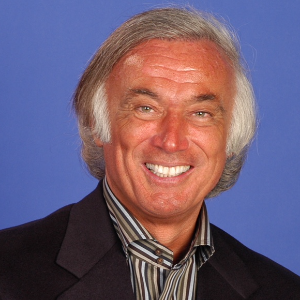
Kenneth R Pelletier
University of California School of Medicine, United States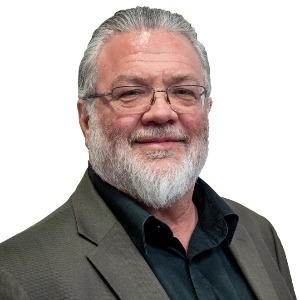
Gene Bruno
Nutraland, United States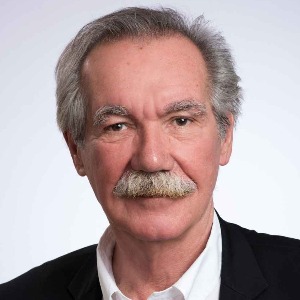
Robert Kempenich
AREMA, France
Sweta Vikram
NimmiLife, United States
Anton Keppel
EATCM Austria, Austria
Elsa Ramos Elias
Healing Spirit-Mind-Body S.L., Spain
Julieta Andico Songco
JAS Consulting Services, United StatesSubmit your abstract Today


Title : Health and joy of living with the practice of what is right and not just what you like
Amadio Bianchi, European Yoga Federation, Italy
Title : Nutrition and longevity- science-based solutions to support the increasing demand in the modern society
Iuliana Vintila, University “Dunarea de Jos” Galati, Romania
Title : Pain: Anthroposophic medicine approach
Robert Kempenich, AREMA, France
Title : Integrating indigenous ways of knowing and occupational therapy: Advancing integrative health through relational and place-based practice
Jennifer Bertoni, NOSM University, Canada
Title : Beyond symptom management: The ayurvedic approach to chronic pain and integrative health
Prerak Shah, Ayulink Ayurveda, India
Title : Acupuncture without the needles
Alexis Brink, Jin Shin Institute, United States